
In most of the world the wind is just weather. In Istria it has names, personalities and a reputation, and people plan their day around it without thinking twice. Ask a local why the boats stayed in this morning or why the café terrace emptied by mid-afternoon, and the answer will be the name of a wind. Anyone who spends time on the water here learns quickly that understanding the Adriatic winds matters more than reading any single forecast, because the same stretch of sea can be glass-flat at breakfast and streaked with whitecaps by lunch, all depending on which wind has decided to blow.
There are three Adriatic winds that shape life along this coast above all others: the Bura, the Jugo and the Maestral. Each comes from a different direction, brings its own kind of sky, and changes the sea in its own way. Learn to recognise them and you understand the rhythm of an entire region.

Why Istrians name their winds
A forecast gives you a number and an arrow. It does not tell you that one wind arrives in sudden violent bursts while another builds slowly over two days, or that one clears the air to crystal while another smothers the coast in warm grey cloud. Generations of fishermen, sailors and skippers learned these patterns the hard way, and the names carry that knowledge in a single word. When someone says the Bura is coming, everyone within earshot already knows roughly what the next day will look like.
For a visitor this is genuinely useful. The character of your day on the water, whether the sea is calm enough for swimming, whether the crossing to Cres is smooth, whether the afternoon turns breezy and bright, comes down to which of these winds is in charge.
The Bura: the cold wind off the mountains
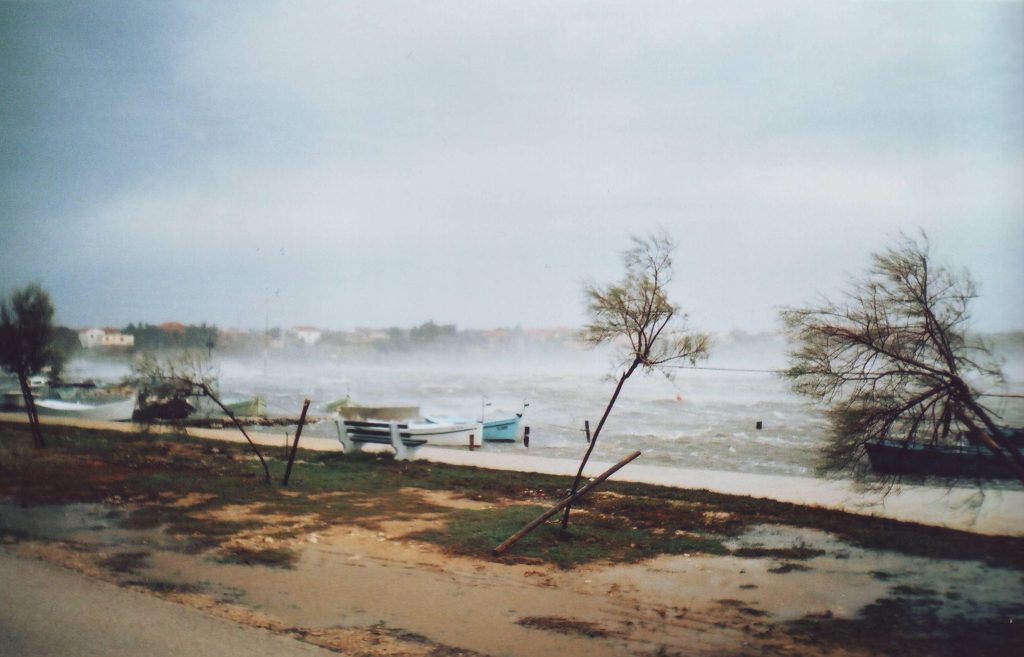
The Bura is the most famous and the most dramatic of the Adriatic winds. It blows from the north-east, spilling down off the mountains behind the coast, and along the Kvarner Gulf it pours over the Učka massif toward the sea. Because it is a wind that falls rather than flows, it does not arrive steadily. It comes in fierce, unpredictable gusts that locals call refuli, hitting hard, dropping away, then hitting again from a slightly different angle.
What the Bura brings is paradoxically beautiful. It is cold and dry, and it sweeps the sky completely clear, giving the kind of visibility where you can pick out individual buildings on Cres across the channel. The locals even have a phrase for this brilliant clarity. The trade-off is the sea, which turns rough fast, with short steep waves and spray torn off the wave tops. The Bura is strongest in the colder months but can appear in summer too, and it is the wind that most often keeps smaller and less stable boats in harbour.
The Jugo: the warm wind that brings the swell
The Jugo is the Bura’s opposite in almost every way. It comes from the south-east, warm and heavy with moisture, and where the Bura is sudden the Jugo is patient. It builds gradually, often over a day or two, thickening the sky with cloud and frequently bringing rain. Because it blows along the entire length of the Adriatic, it has a vast stretch of open water to work on, and that is why the Jugo is the wind that raises the largest, longest swell on the exposed coast.
Locals have a complicated relationship with the Jugo. The warm humid air is famous for flattening people’s mood and bringing on headaches, and there are old stories of it being taken into account as a mitigating circumstance. On the water its effect is more practical. The sea becomes a long rolling swell rather than the choppy mess of a Bura, and while it is steadier, a strong Jugo still makes for an uncomfortable passage and a wet, grey day.
The Maestral: the sailor’s friend
If the Bura and the Jugo are the Adriatic winds to respect, the Maestral is the one to love. It is a thermal wind, born from the daily difference in temperature between the warming land and the cooler sea, and it is the signature breeze of a settled Adriatic summer. On a stable fair-weather day it appears from the north-west around late morning, builds gently through the early afternoon, then fades away again toward evening.
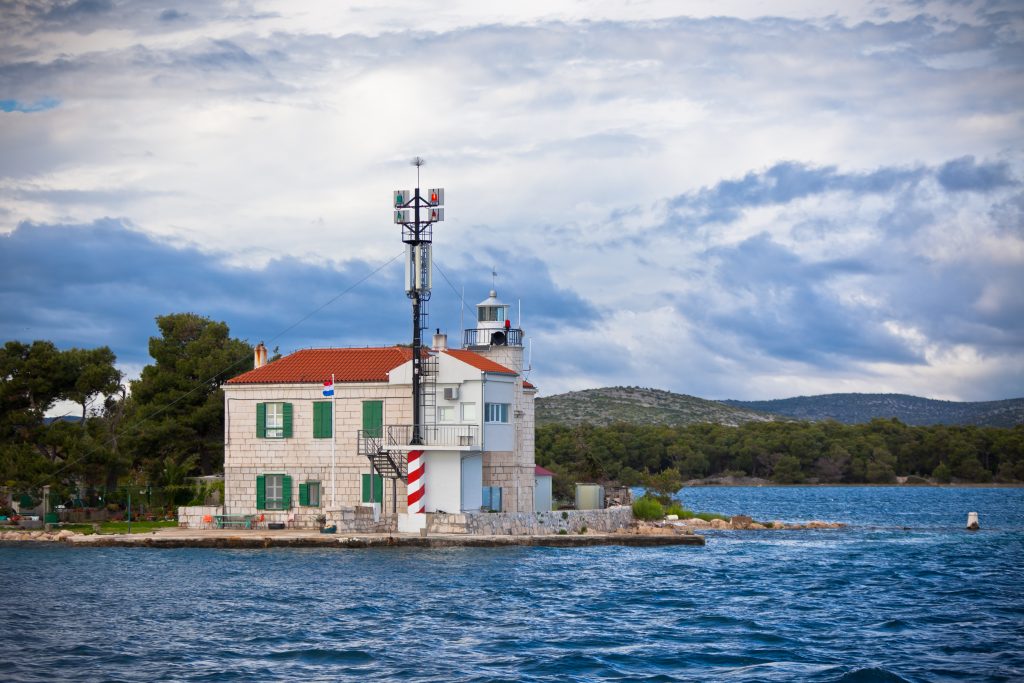
For anyone on the water the Maestral is close to perfect. It is moderate rather than fierce, it cools the heat of the day, and above all its very presence is a sign of stable, sunny weather. A reliable afternoon Maestral usually means the pattern is set fair. Sailors live for it, and even on a motorboat it shapes the ideal rhythm of a day: glassy calm water in the morning for the crossing and the first swim, then a light, bright breeze to keep the afternoon comfortable.
The one of Adriatic winds to watch: the summer nevera
There is a fourth name worth knowing, because it is the one that catches people out. A nevera is a sudden summer squall, a fast-moving thunderstorm that can build on a hot, still afternoon and arrive within an hour. It brings strong gusts, lightning and a brief violent burst of wind and rain, then usually passes as quickly as it came. Neveras are short-lived, but their speed is exactly what makes them dangerous for anyone caught unprepared in open water. Reading the sky for the tell-tale build-up of towering cloud is part of every local skipper’s instinct.
You may also hear a few other names along this coast. The Tramontana is a cold northerly that behaves a little like the Bura, while the south-westerly Lebić can push storm swell in from the open sea. They appear less often than the big three, but they round out the vocabulary of these waters.
How the Adriatic winds shape a day on the water
Put all of this together and you can see why the Adriatic winds, not the calendar, decides what a good day on the eastern Istrian coast looks like. The ideal trip starts in the morning calm before any thermal breeze has built, crosses while the sea is smooth, and uses the gentle afternoon Maestral as a pleasant companion rather than an obstacle. When a Bura is forecast, timing and route matter enormously, and choosing the sheltered side of a bay can be the difference between a rough ride and a fine one. When a Jugo is building, the smart move is often to go early and stay close to the lee of the land.
This is also where the kind of boat you are on starts to matter. A stable, all-weather motorboat handles a brisk Maestral or a moderate chop far more comfortably than a small sailboat, and it gives a skipper the speed to reach a sheltered cove before conditions change. Reading the wind is only useful if your boat lets you act on it.
Frequently asked questions
What is the strongest of the Adriatic winds? The Bura is the most powerful and the most sudden. It blows cold from the north-east in violent gusts and can build a rough sea very quickly, though it also clears the sky to brilliant visibility.
Which of the Adriatic winds brings good weather? The Maestral. This gentle north-westerly afternoon breeze is a thermal wind that appears on stable summer days, so its presence is usually a sign of settled, sunny conditions.
Is it safe to go on a boat trip when the wind is blowing? It depends entirely on which wind and how strong. A light Maestral makes for a lovely day, while a strong Bura or Jugo is best avoided. This is exactly why local knowledge and the right boat matter so much.
When is the sea calmest in Istria? Early morning is usually the calmest part of the day in summer, before the afternoon thermal breeze develops. This is why many of the best trips set out early.
Let the Adriatic winds work in your favour
The Bura, the Jugo and the Maestral are not obstacles to a good day on the water, they are simply the language of this coast, and reading them is the difference between a trip that fights the conditions and one that flows with them. We watch these winds every single day, and we plan our routes and our departure times around what the sea is actually doing, something a fixed-schedule group boat sailing regardless of the forecast can never do. Our boat is built for it too: a stable, all-weather motorboat that stays comfortable in a breeze that would send a sailboat back to harbour.
If you are thinking about a trip and want to know what the winds are likely to be doing on your dates, get in touch and ask us directly. We will tell you honestly what to expect and help you choose the right day and the right route to make the most of this beautiful coast.