
If you’ve spent any time looking at boats—whether at a marina, a boat show or simply browsing online—you’ve probably asked yourself the same question that almost every future boat owner eventually faces:
Should I choose an outboard or inboard engine?
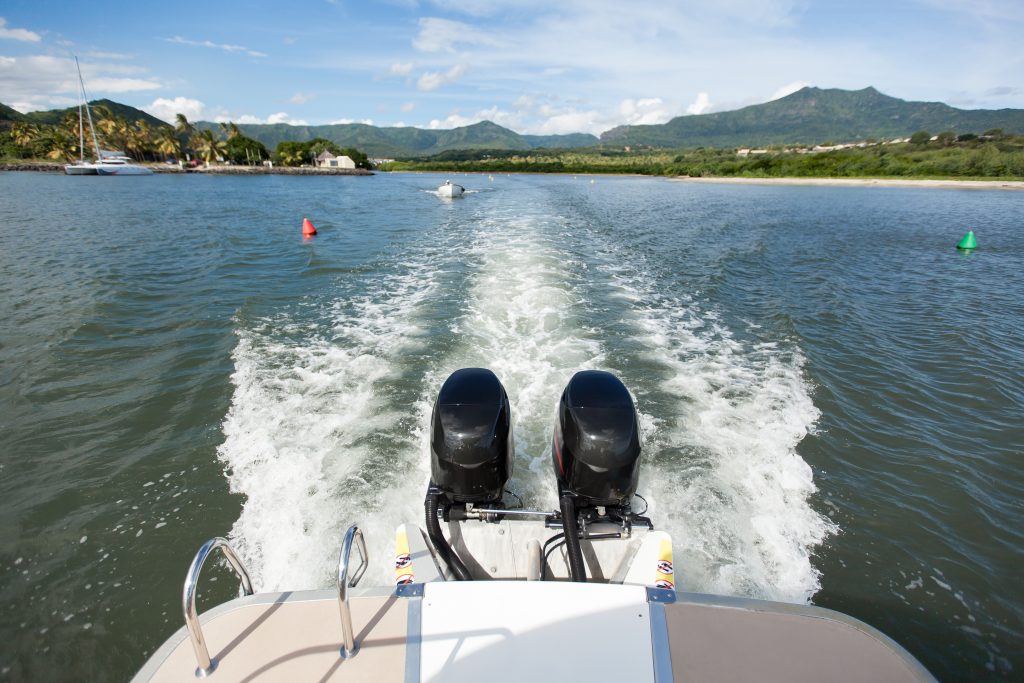
It’s one of the most debated topics in recreational boating, and if you’ve searched online for outboard or inboard engine, you’ve likely found dozens of articles claiming that one solution is clearly superior to the other.
The truth is much less dramatic.
There isn’t a universally better engine. There is only the engine that best matches the way you want to enjoy the water.
For some people, boating means quiet afternoons exploring hidden bays and stopping wherever the sea looks inviting. For others, it’s offshore fishing before sunrise, family weekends on board, or longer coastal cruises. Those different lifestyles naturally lead to different choices.
Understanding the strengths and limitations of each propulsion system is far more valuable than comparing horsepower figures alone. Once you know how each engine behaves in real life, the decision becomes surprisingly straightforward.
Outboard or inboard engine: what’s the actual difference?
At first glance, the difference seems obvious.
An outboard engine is mounted externally on the stern of the boat. The engine, gearbox and propeller are all contained within a single unit that both powers and steers the vessel. Modern outboards can also be tilted completely clear of the water when the boat is moored or navigating shallow areas.
An inboard engine, on the other hand, sits inside the hull. Power reaches the propeller through a shaft or sterndrive system, leaving the mechanical components largely hidden beneath the deck.
From a technical perspective, that’s the difference.
From a practical perspective, however, choosing between an outboard or inboard engine influences everything from maintenance and fuel efficiency to onboard space, handling and even the type of boating you’ll enjoy most.
Why outboard engines have become so popular
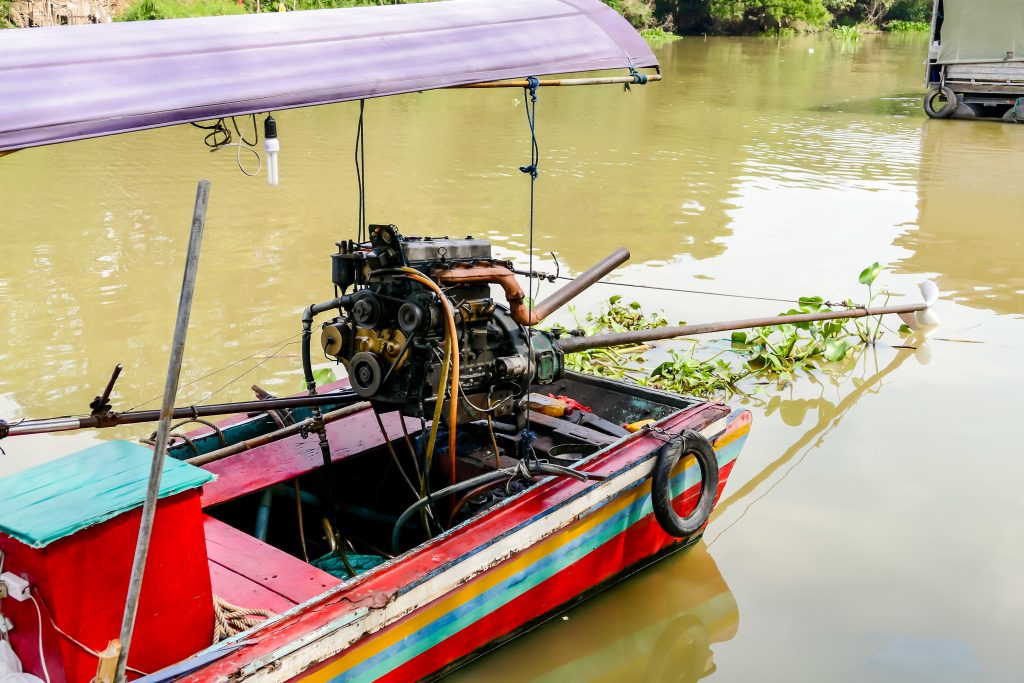
Walk through almost any European marina today and one trend immediately stands out.
Outboard-powered boats are everywhere.
Even models that, twenty years ago, would almost certainly have been equipped with inboard engines are now leaving the factory with one or even several outboards mounted on the transom.
This isn’t simply a fashion trend. Manufacturers have invested heavily in improving outboard technology, and today’s engines are quieter, cleaner, more fuel-efficient and considerably more reliable than previous generations.
One of their biggest advantages is simplicity.
Because the entire propulsion system is mounted outside the hull, maintenance is generally easier. Routine servicing often takes less time, and technicians can access the engine without crawling into a confined engine compartment. For owners, that usually means less inconvenience and, in many cases, lower maintenance costs over the life of the boat.
Outboards also free up valuable interior space. Without a large engine room beneath the cockpit, designers can dedicate more room to seating, storage or accommodation. On boats under eight metres, that extra space can make a remarkable difference to everyday comfort.
Then there’s manoeuvrability.
Since the entire engine turns with the steering system, many outboard-powered boats feel responsive at low speeds. Docking, turning in confined marinas and handling tight spaces often become less intimidating, especially for newer skippers.
Perhaps the biggest advantage for coastal cruising is the ability to raise the engine completely out of the water. Along rocky coastlines, shallow bays or beaches where the depth changes quickly, being able to tilt the engine offers both convenience and peace of mind.
Why inboard engines still have loyal supporters
If outboards have improved so dramatically, why do so many experienced boaters still choose inboards?
The answer lies in the type of boating they enjoy.
Larger cruising boats continue to benefit from engines installed deep inside the hull. This lower centre of gravity contributes to a stable, comfortable ride, particularly when conditions become less predictable offshore.
For long-distance cruising, that stability is something owners quickly learn to appreciate.
Another advantage is the quieter onboard environment. Modern engine compartments are heavily insulated, so conversations in the cockpit often remain relaxed even while cruising for several hours.
Many owners also appreciate the cleaner appearance of an inboard-powered boat. Without a large engine visible on the transom, the stern often feels more open and elegant.
Of course, there are compromises here too.
Routine maintenance usually requires access to the engine compartment, where space can be limited. Repairs can take longer, and servicing is often more involved than with an external outboard unit.
As with every engineering decision, every advantage comes with a trade-off.
It’s not really about the engine or about outboard or inboard engines
One of the biggest mistakes prospective boat owners make is becoming obsessed with technical specifications.
Horsepower.
Fuel consumption.
Maximum speed.
Torque.
These figures certainly matter, but they don’t explain what boating actually feels like.
No specification sheet can describe the silence of drifting into a secluded bay early in the morning. It won’t tell you how relaxing it is to spend an afternoon swimming in crystal-clear water, or how satisfying it feels to discover a small fishing village that most tourists never reach.
Those are the moments that people remember.
Not whether their engine produced ten more horsepower than another model.
That’s why the debate over outboard or inboard engine should never focus solely on engineering. It should begin with a much simpler question:
“What kind of days do I want to spend on the water?”
Once you answer that honestly, the technical decision usually follows naturally.
The best way to decide? Spend time on the water.
Reading reviews and watching YouTube videos can certainly help, but nothing replaces first-hand experience.
Every boat has its own personality.
Some accelerate quickly and feel playful. Others prioritise comfort and effortless cruising. The only way to appreciate those differences is to spend time aboard.
That’s one reason why many people fall in love with boating during holidays rather than after visiting dealerships.
A relaxed day at sea teaches you things that specifications never can.
You notice how the boat moves through the water. How comfortable it feels at anchor. How easy it is to walk around the deck. How naturally the day unfolds without constantly thinking about the mechanics beneath your feet.
Those impressions stay with you long after you’ve stepped back ashore.
From learning about boats to simply enjoying them
Along the eastern coast of Istria, boating is less about covering long distances and more about discovering places that are almost impossible to appreciate from land.
Hidden coves, quiet beaches, dramatic cliffs and small fishing villages appear one after another, often only a few nautical miles apart. It’s the kind of coastline that encourages you to slow down rather than chase speed.
Our private boat trips take place aboard a Merry Fisher 705 powered by a modern inboard engine—a setup that is quate popular for coastal cruising throughout Europe for this kind of boats. Guests rarely book because they’re interested in engines. They come for the sea, the scenery and the freedom of spending a day exploring the Adriatic at their own pace. (check out our tours)
Interestingly, many leave with a better understanding of why so many modern leisure boats have embraced outboard technology. Not because someone explained it to them, but because they experienced it.
Final thoughts
The question of outboard or inboard engine doesn’t have a universal answer, and that’s exactly why it continues to be debated.
Both systems have evolved into remarkably capable and reliable solutions. Both can provide years of enjoyable boating when matched to the right owner.
Rather than asking which engine is objectively better, ask yourself which one supports the experiences you’re hoping to create.
Because in the end, boating has never been about engines.
It’s about where they take you.