
There are few moments more satisfying than arriving in a quiet bay after a morning on the water. The engine falls silent, the only sound is the gentle movement of the sea against the hull, and beneath you the Adriatic is so clear that you can almost count the pebbles on the seabed.
You lower the anchor, let out the chain, engage reverse for a few seconds… and then notice something isn’t quite right. The shoreline seems to be moving. The boat is slowly drifting.
Most people immediately blame the anchor.
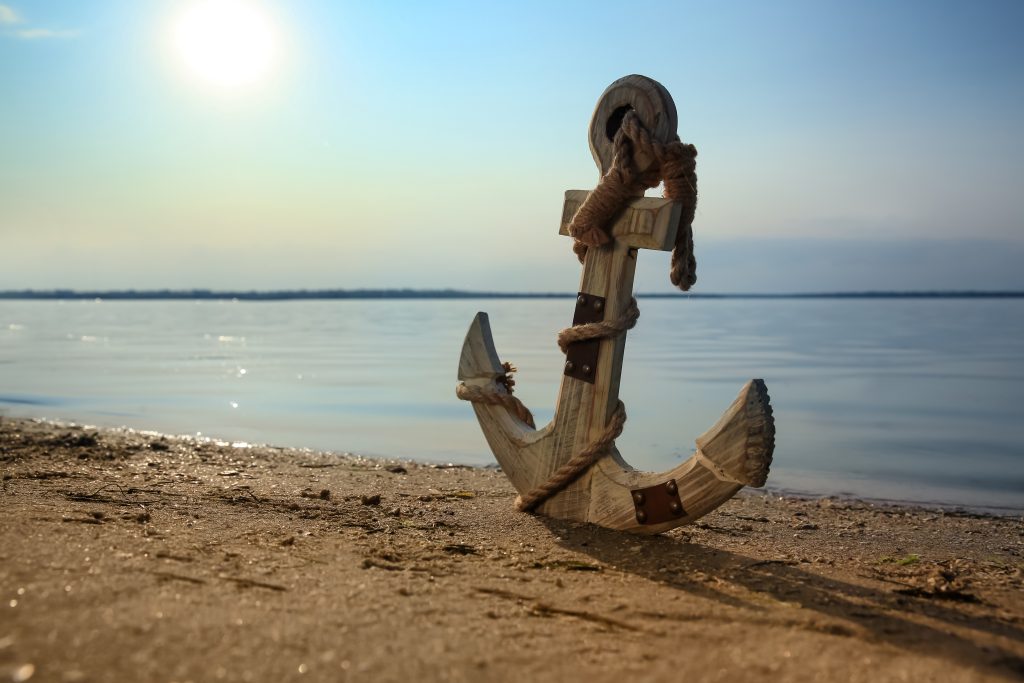
In reality, the anchor, or the boat anchor types, is often the least of the problems.
More commonly, it was dropped on the wrong type of seabed, there wasn’t enough chain, or the anchor simply wasn’t designed for those conditions. Understanding the different boat anchor types isn’t about collecting technical knowledge—it’s about making every stop on the water safer and more enjoyable.
There Is No Such Thing as the Perfect Anchor
One of the biggest misconceptions among new boat owners is that one anchor can handle every situation equally well.
If only it were that simple.
Anyone who spends time cruising knows that the seabed changes constantly. One cove might have fine sand that offers exceptional holding, while the next is covered with smooth rock or dense seagrass. Wind direction changes, currents increase, and what looked like the ideal anchorage twenty minutes ago may suddenly become exposed.
That’s exactly why so many boat anchor types exist today.
Each one was created to solve a different problem.
The Anchor You’ll Probably See Most Often
Walk through almost any marina in the Mediterranean and you’ll quickly notice a familiar shape hanging from countless bows.
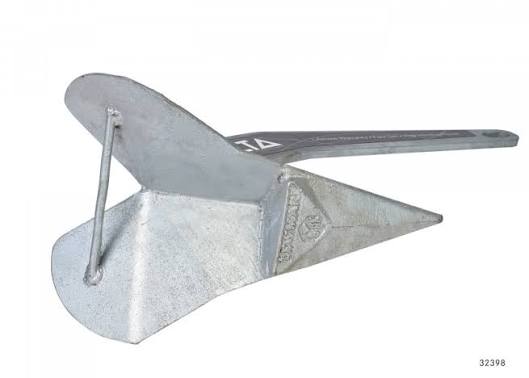
The Delta anchor has become something of a standard for recreational cruising, and for good reason.
Its plough-like design digs quickly into sand and compact mud, while its weight distribution helps it reset if the boat swings as the wind changes direction. That versatility explains why it’s found on everything from small motorboats to larger cruising yachts.
If most of your boating takes place along the Croatian coastline, where sandy patches alternate with firmer seabeds, it’s difficult to go wrong with a Delta anchor.
Why Some Skippers Still Swear by the Danforth
At first glance, the Danforth looks almost too simple to be effective.
Its two large flukes don’t appear particularly impressive until they bury themselves deep into soft sand or mud. Once they do, the holding power is remarkable for such a lightweight anchor.
That’s why many smaller boats still carry one.
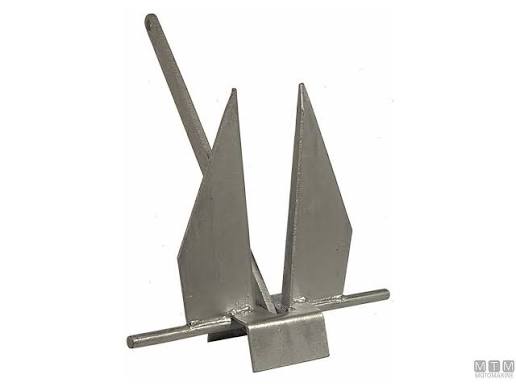
Its weakness becomes obvious only when the bottom changes. On rocky ground or thick seagrass, those same flukes struggle to penetrate, making the anchor far less reliable than it would be on a sandy beach. But you’ll see it among the most favorite boat anchor types.
Modern Anchors Have Changed the Game
Anchor technology hasn’t stood still.
Over the last two decades, designs such as the Rocna have earned an outstanding reputation among long-distance cruisers. Its distinctive roll bar ensures that, as it lands on the seabed, the anchor almost always rotates into the correct position before digging in.
For anyone who regularly anchors in unfamiliar locations, that’s a reassuring feature.
It also explains why you’ll increasingly spot Rocna anchors on modern cruising yachts throughout the Adriatic.
The Bruce Anchor Still Has Its Place
Then there’s the Bruce, often called the Claw anchor.
Unlike some modern designs that rely on aggressive penetration, the Bruce is forgiving. It performs reasonably well across different seabeds and has an excellent ability to reset if wind or current shifts during the day.
No, it doesn’t produce the highest holding figures in laboratory tests.
But boating doesn’t happen in laboratories.
Many experienced skippers continue using Bruce anchors simply because they know exactly how they behave. Confidence built over hundreds of successful anchorages is difficult to replace with statistics alone.
The Seabed Decides More Than the Boat Anchor Types
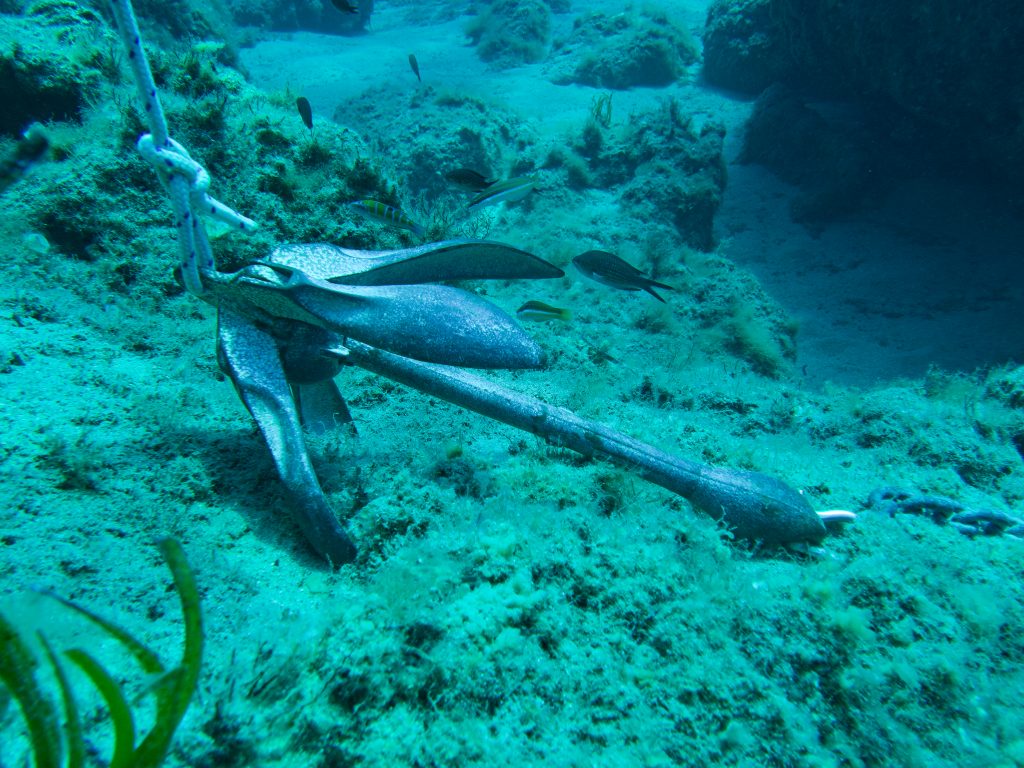
Ask ten experienced boaters which anchor is “best” and you’ll probably hear ten different answers.
Ask them what lies beneath the boat, and suddenly many of those answers begin to agree.
Sand remains the ideal anchoring surface. Most modern anchors bite quickly and hold exceptionally well.
Mud can provide even greater holding, provided the anchor has enough time to bury itself.
Rock is unpredictable. Sometimes an anchor hooks securely between cracks; other times it simply slides across the surface.
Dense seagrass is perhaps the most misunderstood of all. Many anchors never reach the seabed at all, becoming tangled in vegetation instead. Around Croatia, that’s especially important because large areas of Posidonia seagrass are protected. Avoiding these meadows isn’t only good seamanship—it’s also an important way of protecting one of the Mediterranean’s most valuable ecosystems.
Technique Will Always Beat Equipment
One lesson becomes obvious after watching experienced skippers anchor.
They rarely obsess over their anchor.
Instead, they pay attention to the conditions.
They look at the wind before entering the bay. They estimate where the boat will swing. They choose the right depth, lower the anchor carefully instead of throwing it, and allow enough chain to lie on the seabed before gently reversing to set it.
Those small decisions matter far more than many people realise.
An expensive anchor used incorrectly will still drag.
A well-chosen anchor, combined with good technique, will usually hold without drama.
If you’d like to improve your anchoring skills, the guide on How to Anchor a Boat explains the entire process step by step, from choosing the anchorage to calculating the correct amount of chain.
Lessons from the Croatian Adriatic
One of the reasons we enjoy taking guests out along the eastern coast of Istria is that every day provides a different lesson in seamanship.
A sheltered bay near Cres might offer perfect sandy holding one morning, while another stop a few nautical miles away demands a completely different approach because of rock, wind or depth. Selecting an anchorage is rarely about finding the prettiest location. It’s about understanding how the boat, the weather and the seabed interact.
Most guests never notice those decisions being made—and that’s exactly how it should be. Good seamanship often looks effortless because the planning happens quietly in the background.
If you’re planning to explore the Croatian coast yourself, our Private Boat Tours in Croatia aren’t just an opportunity to discover crystal-clear water and hidden coves. They’re also a chance to see how experienced skippers read the sea, choose safe anchorages and adapt to changing conditions throughout the day.
Final Thoughts
Learning about the different boat anchor types isn’t about memorising names or buying the most expensive equipment.
It’s about understanding why different anchors exist, recognising the conditions beneath your boat, and making better decisions every time you stop.
After all, the best anchor isn’t the one with the highest price tag.
It’s the one that quietly does its job while you forget it’s even there, leaving you free to enjoy everything that brought you out onto the water in the first place.