
Adriatic fish species number around 400, but along the coast of Istria you keep meeting the same dozen: on the fish counter, on the grill and on the end of a line. Learn to recognise them and a menu in a konoba becomes easy to read, a snorkelling stop gets more interesting, and an evening of fishing makes more sense.
In short: the fish you are most likely to see around Istria and the Kvarner Bay are gilthead bream (orada), white seabream (šarag), seabass (brancin), mackerel (skuša), horse mackerel (šarun), red mullet (trlja), scorpionfish (škrpina), grey mullet (cipal) and sardines (srdela). On our evening fishing trip from Plomin Luka, guests most often bring home gilthead bream, white seabream and squid.
Why the Adriatic has so many fish so close to shore
The eastern Adriatic coast is rock: cliffs, boulders and stony ledges that drop into sand and seagrass meadows. Every crack is a hiding place and every seagrass meadow is a nursery, so many fish live within swimming distance of the shore. The water is also very clear (we explained why in why the Adriatic Sea is so clear), which is why you can often watch them from the boat before you even put on a mask.
9 Adriatic fish species to know around Istria
The Croatian names are the ones you will read in restaurants and fish markets along the Istrian and Kvarner coast. In Dalmatia some of them change.
1. Gilthead bream (orada)
Silver body, rounded profile and a golden band between the eyes that gives it its name. It feeds on shellfish near rocks and seagrass. Much of the orada on Croatian menus comes from fish farms; a wild one is a small prize, and locals can tell the difference on the plate.
2. White seabream (šarag)
Easy to spot when you snorkel: a silver fish with dark vertical bands and a black spot just before the tail. Šarag lives close to rocks in shallow water and is curious, so it often comes to have a look at swimmers.
3. Seabass (brancin)
Long, silver and strong. In Istria it is brancin, further south lubin. It hunts along the coast, in bays and near freshwater springs and river mouths. Like orada, it is farmed a lot, and the wild fish is the one fishermen talk about.
4. Mackerel (skuša)
Blue-green back with dark wavy stripes. Mackerel swim in schools in open water and come close to the coast in large numbers. Grilled skuša with olive oil and garlic is one of the cheapest good meals on the coast.
5. Horse mackerel (šarun)
It looks like a mackerel at first glance, but has a line of hard, bony scales along its side. It also moves in schools and ends up fried or grilled in the same konobas.
6. Red mullet (trlja)
Pink to red, with two barbels under the chin that it uses to search the sandy bottom for food. You can watch it digging when you snorkel over sand. On menus it is usually fried whole.
7. Scorpionfish (škrpina)
The master of camouflage: brown and red, covered in skin flaps, motionless on the rocks. Its spines are venomous, so it is a fish to look at, not to touch. In the kitchen it is the classic base for fish soup and brodet.
8. Grey mullet (cipal)
The fish you see in almost every harbour, cruising just under the surface in small groups. It tolerates brackish water and gathers where freshwater meets the sea.
9. Sardine (srdela)
Small, silver and the fish that kept the coast fed for centuries. Sardines and anchovies are still caught by the fishing boats of the Kvarner and Istria, and fresh srdele on the grill are a summer standard.
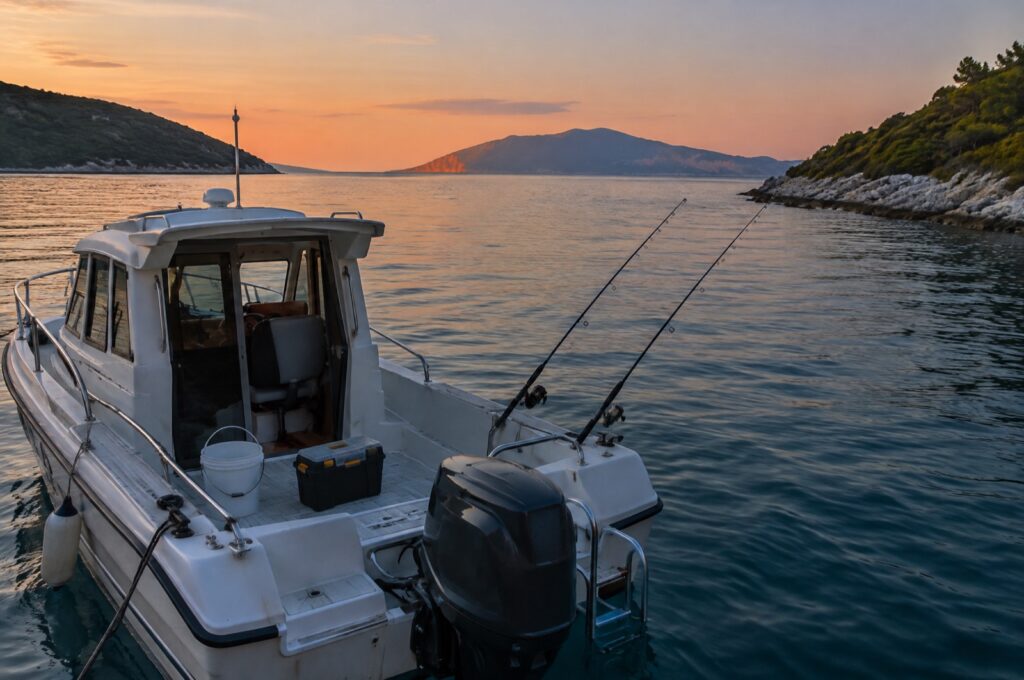
What our guests catch on the evening fishing trip
Our Fishing Experience leaves Plomin Luka at 17:30 on our Merry Fisher 705 and returns at 21:00. Our skipper takes you to fishing spots along the coast and the gear is on board, so you do not need to bring anything. Water and fuel are included, and there is room for up to four people.
The catch we see most often:
- Gilthead bream and white seabream, the two classic fish of the rocky coast, both very good to eat.
- Squid (lignje), which are not fish but are the favourite catch of many guests. Squid come up to feed when the light drops, which is one reason why fishing in Istria in the evening works well.
What you catch, you take home. If you are staying in an apartment with a grill, that is dinner sorted.
What to do with your catch
Istrian cooking keeps fish simple. Gilthead bream and seabream go on the grill (na gradele) whole, brushed with olive oil, and get garlic, parsley and a little more olive oil at the end. Squid are grilled or fried, and many families serve them with Swiss chard and potatoes (blitva). Clean the fish the same evening and keep it cold until you cook it: fresh fish from the Adriatic needs nothing more.
Fish you can see without a rod
You do not need to fish to meet most of these species. With a mask in shallow water you will see šarag, red mullet digging in the sand, small schools of fish near the rocks and, if you are patient, a scorpionfish that nobody noticed before. Our guide to snorkeling in Istria tells you what else lives below the surface.
FAQ
What are the most common Adriatic fish species in Istria?
Gilthead bream (orada), white seabream (šarag), seabass (brancin), mackerel (skuša), horse mackerel (šarun), red mullet (trlja), scorpionfish (škrpina), grey mullet (cipal) and sardines (srdela). You find them on menus, at fish markets and near the rocks when you snorkel.
Is there anything dangerous among the fish in the Adriatic?
Scorpionfish and weever fish have venomous spines. They do not attack, but you should not touch them, and water shoes help on sandy and rocky bottoms. Sharks are extremely rare in the northern Adriatic.
What can you catch on an evening fishing trip in Istria?
On our trip from Plomin Luka guests most often catch gilthead bream, white seabream and squid. The catch depends on the evening, the weather and the season, so nobody can promise a number of fish.
Do I need my own fishing gear?
No. On our Fishing Experience the fishing gear is included, together with water and fuel. You only need comfortable clothes, a light jacket for the way back and something to carry your catch home.