
Visitors arriving in Croatia to discover the Adriatic Sea often ask the same question after stepping off the boat or diving into the sea for the first time.
“How can the water be this clear?”
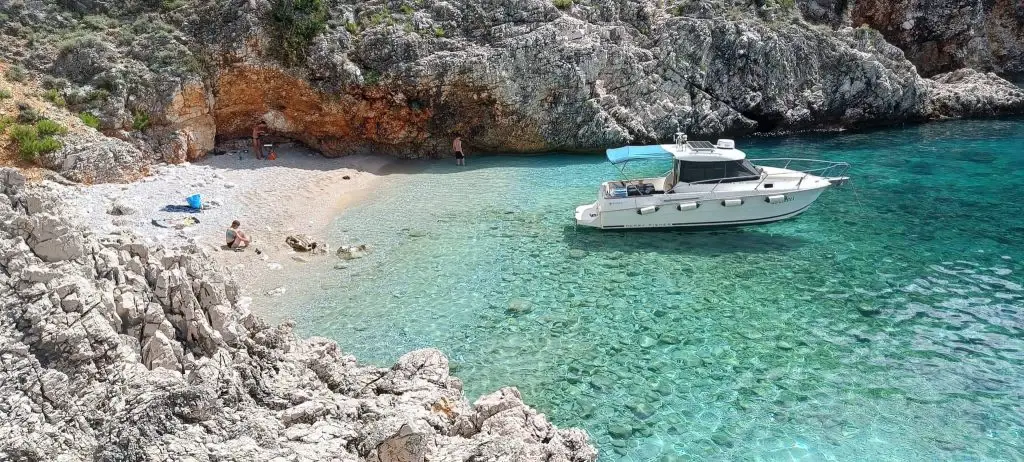
The answer begins long before anyone launches a boat or puts on a mask and snorkel.
Water clarity depends on several natural processes that have shaped the eastern Adriatic Sea for thousands of years. The coastline of Istria and the Kvarner Gulf provides an ideal combination of geology, sea circulation and underwater ecosystems. Together, they create the vivid shades of blue that have become one of Croatia’s best-known natural features.
Understanding these processes makes every swim, every snorkeling stop and every private boat trip even more rewarding because you begin to see the landscape through different eyes.
Limestone Shapes the Water You See
The eastern Adriatic Sea coast rests on vast layers of limestone. Rainwater slowly filters through this porous rock before reaching the sea.
During that journey, the water leaves behind much of the fine sediment that would otherwise remain suspended in the sea. Rivers flowing through clay-rich landscapes usually carry tiny particles that cloud the water for days after heavy rain. Along much of the Croatian coast, this effect remains limited because underground drainage replaces large muddy rivers.
The result appears every time sunlight reaches the seabed. Even several metres below the surface, rocks, sea grass and schools of fish remain clearly visible.
This geological feature explains why many of the clearest swimming spots in Croatia lie along the limestone coast of Istria and the neighbouring islands.
The Sea Is Always Moving
Looking across a calm bay, the surface often appears perfectly still.
Beneath it, water is constantly moving.
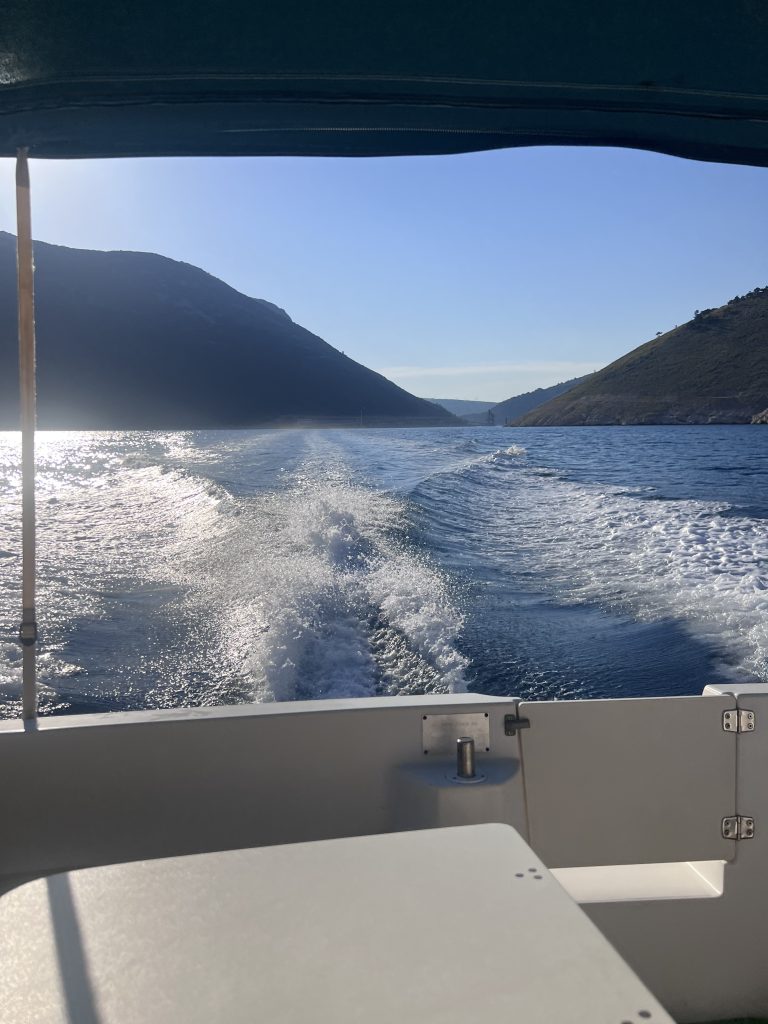
Currents exchange water between the northern Adriatic Sea and the open Mediterranean Sea. Gentle circulation carries away suspended particles while bringing fresh, oxygen-rich seawater into coastal areas.
Seasonal winds such as the Maestral also play an important role. During summer afternoons, this regular breeze creates gentle surface movement that helps mix the upper layers of the sea without disturbing its remarkable clarity.
This continuous exchange supports healthy marine habitats while preserving the transparent water that swimmers and divers enjoy throughout the season.
A Living Underwater World Helps Keep the Sea Healthy
Many marine organisms contribute to water quality in ways that are easy to overlook.
Shellfish filter enormous quantities of seawater each day as they feed. Seagrass meadows slow down wave movement close to the seabed, allowing fine particles to settle naturally instead of remaining suspended in the water.
One of the most valuable plants in the Adriatic is Posidonia oceanica. Although many people mistake it for seaweed, it is a flowering marine plant with deep roots and long leaves that provide shelter for countless species of fish and invertebrates.
Healthy seagrass meadows support biodiversity, protect the coastline and help maintain the exceptional visibility that attracts snorkelers and divers from across Europe.
Why the Water Changes Colour Throughout the Day
The Adriatic Sea is famous for its changing colours.
Early in the morning, sheltered bays often appear deep blue.
As the sun climbs higher, shallow areas become turquoise while white limestone beneath the surface reflects light back through the water.
During the late afternoon, the sea takes on warmer shades as the angle of the sunlight changes once again.
Water itself has very little colour. What we see depends on sunlight, depth, the composition of the seabed and the clarity of the water. Sandy bottoms create lighter shades, while rocky areas produce darker blues with striking contrasts.
Watching these colours change during a day on the water becomes part of the experience.
Why Snorkeling Around Rabac and Cres Feels Different
Clear water transforms snorkeling.
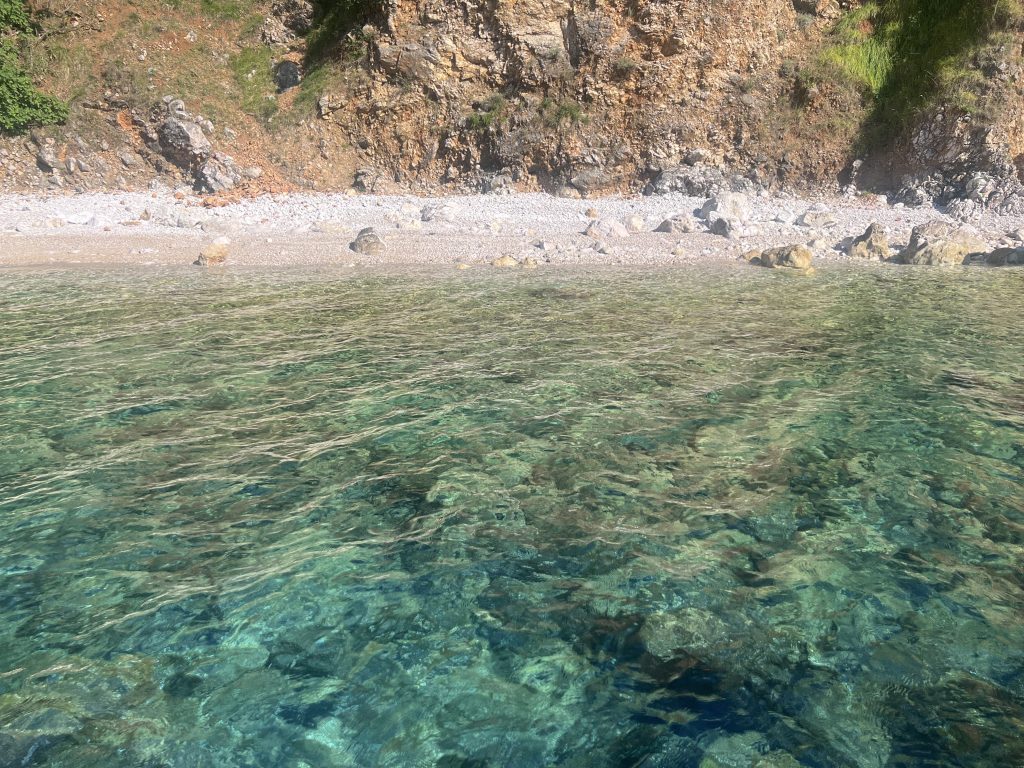
Fish remain visible from the surface. Rocky reefs reveal small caves, sea stars and colourful marine life without requiring deep dives. Light reaches much further underwater, making every detail easier to appreciate.
The coastline between Rabac and the island of Cres offers many sheltered bays where visibility often remains excellent throughout the summer. Reaching these places by boat allows visitors to spend time in coves that stay quiet even during the busiest weeks of the season.
Each bay has its own character. Some feature broad limestone shelves that slope gently into the sea. Others hide steep underwater walls where larger fish gather in deeper water.
A Private Boat Trip Gives You a Different Perspective
Many visitors experience the Adriatic from busy beaches.
A private boat trip opens another side of the coastline.
Hidden coves appear between high cliffs. Small pebble beaches emerge where no roads exist. Quiet anchorages invite a swim far from the busiest parts of the coast.
The journey itself becomes part of the day. Dolphins sometimes appear in the distance. Seabirds circle above the cliffs. Looking back toward the Istrian coast reveals landscapes that remain invisible from land.
The clear water connects every part of the experience, from the first swim to the final stop before returning to Rabac.
Looking After the Adriatic
The clarity of the Adriatic is one of Croatia’s greatest natural treasures.
Local communities, marine protected areas, responsible tourism operators and visitors all play a part in preserving it.
Simple habits make a difference. Respecting marine life, avoiding litter, using designated mooring points where available and leaving each bay exactly as it was found help protect this unique environment for future generations.
The reward is immediate.
Another summer arrives, the sea settles into its familiar shades of blue, and visitors step aboard wondering whether the water can truly be as clear as the photographs suggest.
A few minutes later, they have their answer.
2 responses